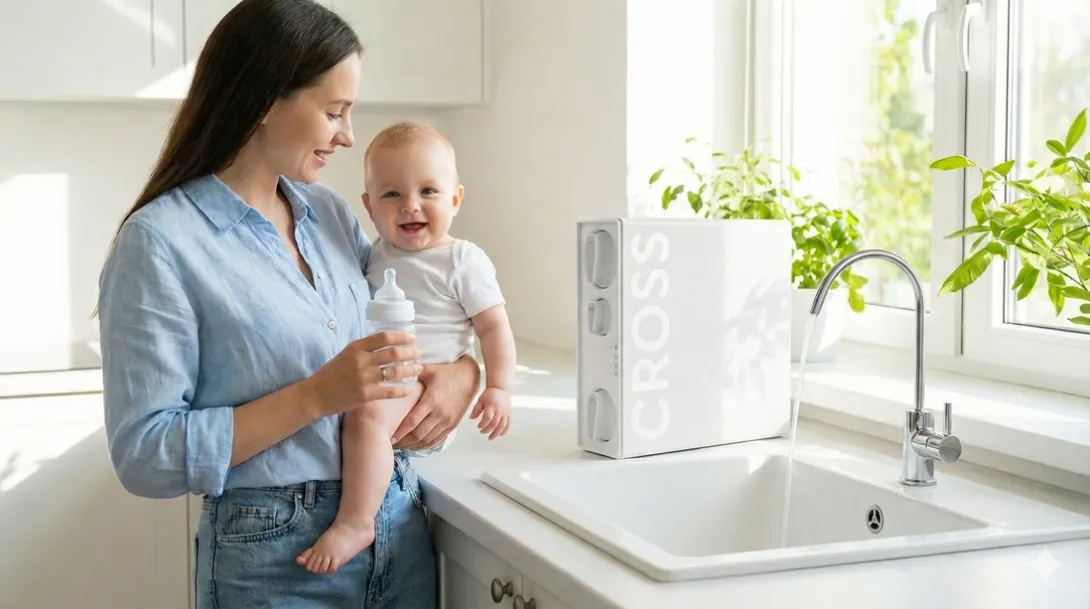
For millions of families living in metropolitan areas, the kitchen faucet is an everyday convenience taken completely for granted. We fill water glasses, brew morning coffee, and rinse fresh vegetables without a second thought. Yet the arrival of a newborn introduces an entirely new lens of vulnerability. When you prepare to mix your baby’s first bottle of powdered formula or fill an evening bath, an urgent question naturally arises: is municipal city tap water genuinely safe for an infant?
The Dual Nature of Municipal Water Quality
The answer to whether city tap water is safe for infants is nuanced, requiring an understanding of both public water infrastructure and private household plumbing. In most major metropolitan regions, public water authorities perform an extraordinary feat of engineering. They treat billions of gallons of raw water daily, utilizing coagulation, sedimentation, filtration, and disinfection to ensure water leaving municipal treatment plants complies with strict federal standards.
However, an impeccably treated water supply at the central reservoir does not guarantee purity at your individual kitchen sink. The water must travel through dozens of miles of municipal distribution mains, underground service connection pipes, and finally the internal plumbing lines and brass fixtures inside your specific building. This final leg of the journey—often termed the “last mile” problem—is where water quality can degrade significantly.
Why Infants Are Uniquely Vulnerable to Water Contaminants
An infant is not simply a miniature adult. Their physiological immaturity creates profound susceptibility to environmental contaminants that healthy adult bodies can readily process and eliminate:
High Volume Consumption Relative to Body Weight
Pound for pound, an infant consumes significantly more water than an adult. An exclusively formula-fed infant ingests nearly twenty percent of their total body weight in reconstituted water every single day. If that water contains even trace amounts of dissolved heavy metals, their cumulative physiological exposure is extraordinarily high.
Immature Metabolic and Excretory Pathways
A newborn’s renal clearance rate and liver enzyme pathways operate at a fraction of adult capacity. Toxic elements such as dissolved lead, cadmium, and arsenic are filtered slowly, allowing higher concentrations to circulate in the bloodstream and deposit into soft tissues and rapidly developing bones.
The Porous Blood-Brain Barrier
During the first year of life, the blood-brain barrier is still forming its protective cellular junctions. Neurotoxic metals readily penetrate neural tissue, interfering with synaptic pruning, myelin formation, and cognitive development. This heightened biological vulnerability makes proactive water evaluation a medical priority for families.
Uncovering the Hazards in Older Urban Plumbing
In historic urban centers and established residential boroughs, the primary threat to tap water purity is the age of domestic plumbing infrastructure.
Many pre-1986 buildings contain copper pipes bonded with fifty-fifty lead-tin solder, older brass faucets containing up to eight percent lead, or full lead service lines connecting the building foundation to the street main. Investigating Municipal water testing in Queens or municipal utility monitoring programs reveals how local water chemistry and anti-corrosion treatments interact with vintage pipes across diverse neighborhoods.
When water sits stationary in these older pipes overnight, lead and copper leach into the standing water. Independent laboratory sampling, such as that conducted through Independent water testing in Queens or certified metropolitan laboratories, frequently reveals that “first-draw” morning water contains several times the lead concentration found in water that has been thoroughly flushed for several minutes. Learn how to address these infrastructure challenges within compact living spaces by reading our guide on urban baby living and apartment safety.
Common City Water Contaminants: What Parents Need to Know
When evaluating municipal water quality reports (often called Consumer Confidence Reports), focus on these critical parameters:
Lead and Copper
There is no known safe blood lead level in infants. Lead exposure is linked to irreversible cognitive delays, hyperactivity, and behavioral difficulties. Copper leaching can cause acute gastrointestinal cramping, nausea, and diarrhea in infants.
Disinfection Byproducts (DBPs)
Municipal plants add chlorine or chloramines to destroy waterborne pathogens like cholera and typhoid. While life-saving, these disinfectants react with trace natural organic matter to form trihalomethanes (THMs) and haloacetic acids (HAAs). Certified domestic carbon filters effectively remove these volatile byproducts.
Microplastics and Emerging Chemical Compounds
Recent environmental testing has identified microscopic plastic polymers and per- and polyfluoroalkyl substances (PFAS)—so-called “forever chemicals”—in numerous municipal surface water sources. These persistent chemicals are linked to endocrine disruption and altered immune function.
Dispelling the Boiling Myth
One of the most persistent and dangerous misconceptions among new parents is the belief that boiling tap water removes all toxins. Boiling water for sixty seconds is highly effective for killing biological pathogens—such as bacteria, viruses, and microbial cysts. However, boiling has zero ability to remove heavy metals, nitrates, or chemical pollutants.
In fact, as water boils, pure steam evaporates into the air while non-volatile contaminants remain in the pot. Boiling tap water with elevated lead levels actually concentrates the lead, making the water more toxic per ounce. If your plumbing contains heavy metals, boiling alone is entirely insufficient. For safe preparation procedures, consult our complete guide on infant feeding and nutrition guidance.
Practical Action Steps for Parents Using City Tap Water
You do not need to panic or rely permanently on single-use bottled water. Following practical household protocols ensures your tap water remains safe for your child:
- Perform the Morning Cold Water Flush: If your faucet has sat unused for six hours or more, run the cold water tap at full flow for two to three minutes before collecting water for drinking or cooking. This flushes out stagnant water that absorbed pipe metals overnight.
- Never Use Hot Tap Water for Ingestion: Always draw cold water from the tap, even if you plan to heat it on the stove. Hot water dissolves plumbing metals far more aggressively and pulls sediment from residential water heaters.
- Clean Faucet Aerators Regularly: Unscrew the small mesh aerator on your kitchen faucet monthly. Soak it in white vinegar and brush away accumulated mineral flakes and metal debris.
- Install a Certified Filter: Invest in a water filter independently certified by NSF International or the Water Quality Association (WQA). Look specifically for NSF Standard 53 (lead and chemical reduction) or NSF Standard 58 (reverse osmosis).
Pairing water filtration with broader household safety measures keeps your living space secure. Review our comprehensive checklist for home safety protocols and childproofing essentials.
Authoritative Public Health Resources
Federal health and environmental agencies provide rigorous benchmarks to guide parental water decisions. The EPA basic information on lead in drinking water outlines actionable safety guidelines for residential consumers. Research published through the World Health Organization lead poisoning fact sheet documents the critical necessity of preventing childhood heavy metal exposures. Furthermore, the clinical resources at MedlinePlus child safety and environmental health provide practical strategies for identifying and mitigating domestic chemical hazards.
Testing Is the Only True Way to Know
Because lead and other harmful contaminants are invisible, odorless, and tasteless, you cannot evaluate water purity by appearance alone. Certified laboratory testing provides the objective clarity every parent deserves. Once you understand your home’s water profile, you can implement targeted, affordable filtration that protects your baby’s health throughout infancy and childhood.
For more answers regarding nursery preparations and infant wellbeing, browse our parenting FAQ resource or send your questions to our team via our contact page. With accurate knowledge, you can approach your family’s water safety with absolute confidence.